Permit Test by State: Requirements, Questions & Passing Scores
A permit test is not a single national exam. Your state decides the documents, question format, passing benchmark, fee, testing location, and retake rules. Use this guide to compare the main differences, choose the right state study page, and verify the official instructions before your appointment.
Quick answer: what changes by state?
The biggest differences are eligibility age, identity and residency documents, the number and type of questions, the passing score, whether the test can be taken online, and what happens after a failed attempt. A practice quiz can help you learn the rules, but it cannot replace the current state handbook or an official appointment checklist.
Start with the site's permit test practice, then move to a state-specific tool such as the California, Florida, or Texas practice page. If you are comparing test length only, see the separate question-count breakdown.
Permit test by state: the five rules that change most
Search results often make permit tests look interchangeable, but the same phrase can describe very different application paths. Use these checkpoints before you study a single question.
1. Eligibility and age
States set their own minimum age, teen-supervision rules, driver-education requirements, and learner restrictions. An adult applicant may use a different form or test path from a teenager in the same state.
2. Documents and identity
Expect some combination of identity, lawful-status, Social Security, residency, and payment evidence. Under-18 applicants may need a parent or guardian signature, school form, or consent document.
3. Questions and passing score
Some states use one general knowledge test; others separate road signs from traffic rules. The question count and percentage needed to pass are state and applicant specific.
4. Test location and language
Online testing, appointment rules, accessibility, language choices, and interpreter policies differ. Confirm the approved testing channel before relying on a third-party practice page.
The fifth checkpoint is what happens after a miss: some agencies allow a retest after a waiting period, while others require a new appointment or extra study step. Treat every comparison as a starting point, not a substitute for the issuing agency's current instructions.
State permit test comparison: questions, sections, and study targets
The table below summarizes the state-specific practice formats currently covered on PermitTestPro. These figures are useful for planning a study session, but your official test can vary by age, credential, language, or rule update. Follow the linked handbook or licensing page when the two sources differ.
| State | Practice format | Planning benchmark | Start here |
|---|---|---|---|
| New York | General learner knowledge | 20 questions; 14 correct is a common pass target | NY guide |
| Florida | Class E knowledge | 50-question practice format; 40 correct study target | Florida test |
| California | General rules and signs | 46-question practice format; verify the applicant version | California test |
| Texas | DPS-style general knowledge | 30-question practice format; 21 correct study target | Texas test |
| Ohio | Temps knowledge | 40-question practice format; 30 correct study target | Ohio test |
| Illinois | Rules of the Road | 35-question practice format; 28 correct study target | Illinois test |
| Virginia | Signs plus general knowledge | Separate sections; practice both instead of averaging them | Virginia test |
| Georgia | Road Signs and Road Rules | 20 questions per section; aim for 15 correct in each | Georgia test |
| Nevada | DMV knowledge | 25-question practice format; 20 correct readiness target | Nevada test |
| Indiana | Signs plus traffic rules | 16 sign and 34 rule questions in the practice model | Indiana test |
| Massachusetts | RMV learner knowledge | 25-question practice format; 18 correct study target | Massachusetts test |
Why the caution? A state may publish different versions for adults, minors, commercial applicants, motorcycle applicants, or retests. The table is a study map; the current driver manual and licensing agency remain the authority.
State-specific learner permit requirements checklist
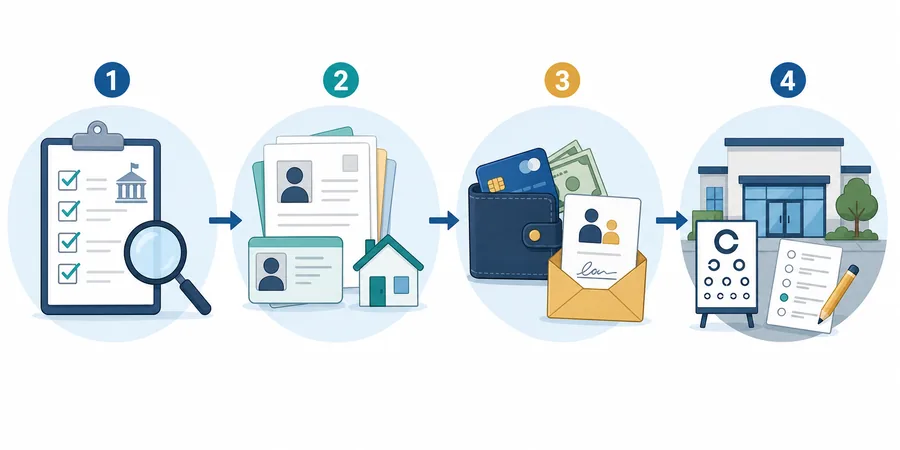
Most appointment problems come from preparation details rather than difficult questions. Use this checklist to turn a broad state search into a specific to-do list.
- Choose the credential. Confirm whether you need a learner permit, a first driver license, a motorcycle permit, or a commercial learner permit. Each category can use a different handbook and exam.
- Check the applicant path. Note your age, whether you already hold a license from another state, and whether a driver-education course or supervised-hours log applies.
- Collect documents. Compare the official list for identity, lawful status, Social Security information, residency, name changes, and parent or guardian consent.
- Confirm the test setup. Check appointment or walk-in rules, payment methods, language support, vision screening, accessibility, and whether online testing is limited to specific applicants.
- Record retake rules. Write down the waiting period, fee, appointment requirement, and whether a failed section must be repeated separately.
If your documents are the uncertain part, use the site's DMV document checklist and appointment guide as general preparation. Then replace the generic items with the official checklist for your state.
How to verify permit test requirements by state
Use a repeatable verification process instead of trusting a dated social post or a generic “all states” table.
- Open the state driver manual or learner-permit page from the official licensing agency.
- Find the section for your credential and age group, not just the general driver page.
- Check the published question format, passing rule, fee, testing location, and retake policy.
- Look for a page date, revision notice, or downloadable manual version. Save the link you used.
- On appointment day, bring the documents listed for your exact applicant category and arrive with time to resolve a mismatch.
Official examples include the California DMV instruction-permit page, Florida Class E exam guidance, the Virginia knowledge-exam page, and Indiana BMV knowledge-exam guidance. These links illustrate the verification method; they do not replace your own state's current instructions.
A practical seven-day study plan for any state
Once you know your state's rules, a short study cycle is more useful than taking random quizzes. Keep a missed-question log with the topic, the wrong assumption, and the handbook section that fixes it.
| Day | Focus | What to do |
|---|---|---|
| 1 | Requirements | Save the official handbook, documents list, fee, and appointment instructions. |
| 2 | Signs | Study shapes, colors, right-of-way signs, work zones, and school-zone warnings. |
| 3 | Rules | Review speed, space, lane changes, turns, parking, and alcohol or distraction rules. |
| 4 | First practice | Take a state-matched quiz without looking up answers; mark every uncertain item. |
| 5 | Repair weak areas | Read the relevant handbook sections and retake only the topics you missed. |
| 6 | Timed review | Complete a mixed test under realistic conditions and check your pacing. |
| 7 | Final check | Confirm documents and appointment details, then review mistakes rather than cramming new material. |
Aim for a stable buffer above the official passing benchmark on more than one practice set. A single lucky score is less useful than being able to explain why each answer is correct.
Common mistakes when comparing states
- Using another state's numbers. A 50-question Florida practice test cannot tell you how a Virginia signs section is scored.
- Studying a generic handbook. Traffic laws share principles, but speed limits, school-zone rules, penalties, and administrative steps can differ.
- Ignoring the applicant category. Teen, adult, motorcycle, commercial, and out-of-state applicants may not follow the same path.
- Assuming online means official. Search results may mix official testing, practice quizzes, and third-party providers. Confirm the approved channel.
- Checking documents too late. A strong practice score does not help if your proof of residency or consent form is missing.
For a general refresher, the site's study guides and permit test tips can support your routine. Keep the state handbook as the controlling source for legal or administrative details.
Frequently asked questions
Official sources to check before test day
State rules can change. Recheck your agency's current manual, appointment page, and document list immediately before you test. The official links in this guide are examples of the kind of source to use, not a replacement for the licensing agency in your state.
Bottom line
The best permit test by state strategy is simple: identify your exact credential, verify the current official requirements, study the state handbook, then use a matching practice test to expose weak topics. State comparison tables are useful for planning, but the agency that issues your permit decides the final documents, questions, score, and appointment rules.
Ready to practice? Start with the free permit test practice, then use the state page that matches your application.