Ohio Motorcycle Permit Test Online: 2026 Practice & Study Guide
The Ohio motorcycle permit test online is only one part of the endorsement path. This guide explains who may use the online knowledge test, what to study from official Ohio material, how to use practice questions without memorizing guesses, and what to verify before you ride.
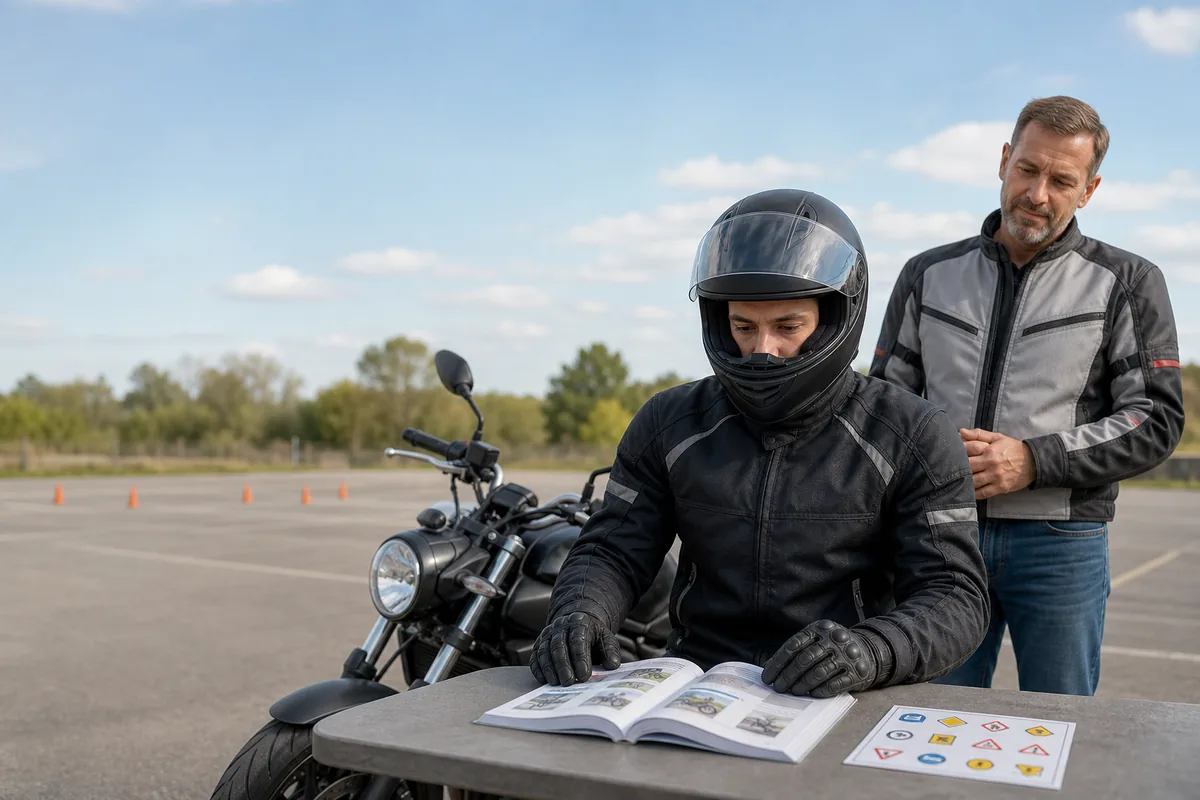
Quick answer: can you take it online?
Sometimes. Ohio BMV currently says an adult applicant with a valid Ohio driver license may complete the motorcycle endorsement knowledge test online to begin the temporary permit process. That option does not mean every applicant, minor, credential type, or follow-up step is online.
Before you start, check the official BMV motorcycle page, use the current Ohio motorcycle endorsement instructions, and keep your study plan separate from the legal process. A practice session can improve readiness, but it cannot replace the Ohio Motorcycle Operator's Manual or the agency's current eligibility screen.
Ohio motorcycle permit test online: eligibility comes first
The most important distinction is between the knowledge test and the full motorcycle endorsement. Ohio's online option is designed to start the knowledge-test portion for an eligible adult applicant; it is not a shortcut around the temporary instruction permit, supervised riding rules, or skills requirement.
Use this three-part check before you study for an online appointment:
- Confirm the applicant category. The BMV language refers to adult applicants with a valid Ohio driver license. If you are under 18, applying for a different credential, transferring an out-of-state record, or dealing with a restriction, stop and verify the correct path directly with Ohio BMV.
- Confirm the test channel. An online knowledge test may have identity, device, browser, payment, or follow-up requirements. Save the confirmation page and do not assume an online pass eliminates an in-person visit.
- Confirm the next legal step. Passing the knowledge test is not permission to ride without restrictions. Read the temporary instruction permit rules and plan supervised practice before booking any skills or training step.
If you are searching for a generic motorcycle permit practice test, use it for topic review only. The Ohio-specific article you are reading is about the state process and online eligibility, not an official DMV exam.
What to study for the Ohio motorcycle permit test
Start with the current Ohio Motorcycle Operator's Manual and the motorcycle section of the state's Digest of Motor Vehicle Laws. These sources give you the vocabulary and safety decisions that a generic quiz may miss. Read actively: after each chapter, explain the safest choice in your own words instead of only highlighting sentences.
| Topic | What to understand | Practice prompt |
|---|---|---|
| Traffic rules | Right-of-way, signs, signals, lane use, and speed decisions still apply to a motorcycle. | Which action gives you the most time and space? |
| Motorcycle control | Braking, turning, shifting, traction, and low-speed balance require rider-specific judgment. | What changes when traction or visibility is reduced? |
| Position and visibility | Lane position, blind spots, following distance, and communication help other drivers see you. | Where can you create a safer escape route? |
| Protection and impairment | Protective gear, fatigue, alcohol, medication, and weather affect risk before the engine starts. | What would make you delay the ride? |
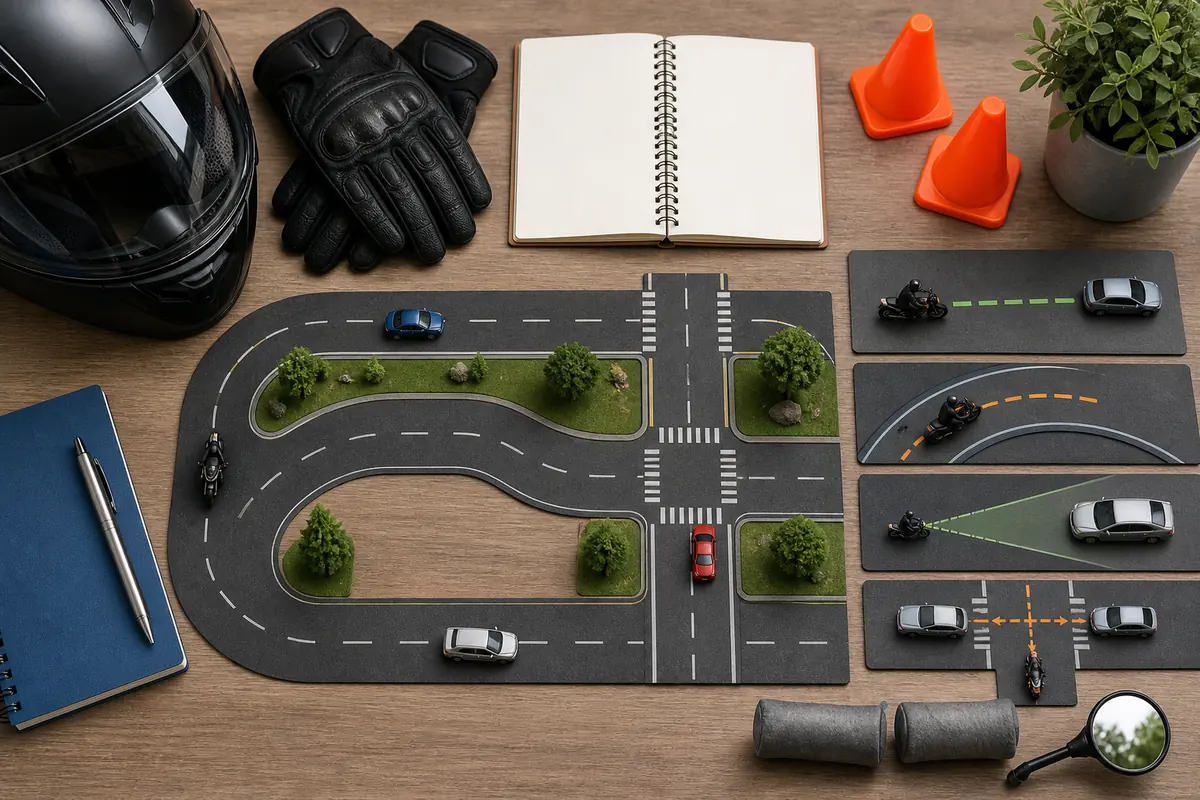
How to use Ohio motorcycle practice questions
Practice questions are valuable when they expose a weak topic, not when they encourage answer memorization. A strong Ohio motorcycle practice test should make you explain why one action is safer than another and should point you back to the manual when you miss a question.
1. Take a cold check
Answer a short mixed set before studying. Mark uncertain answers even when you guessed correctly.
2. Review by topic
Group misses into signs, control, spacing, visibility, and rider safety instead of only counting a score.
3. Explain the answer
Say what hazard the correct choice manages and which handbook section supports it.
For example, a question about a wet curve is not testing a magic phrase. It is testing whether you recognize reduced traction, slow before the turn, keep the motorcycle stable, and avoid abrupt inputs. A question about a car beside you may be testing blind-spot awareness and an escape route. These scenarios are more useful than a list of isolated letters.
Use the site's motorcycle practice test for a baseline, then return to the official manual. If you also need general Ohio learner rules, the Ohio temps practice page can supplement traffic-rule review, but it is not a substitute for motorcycle-specific preparation.
A practical seven-day Ohio motorcycle study plan
You do not need to read the entire manual in one sitting. A short plan works better when each day has a clear purpose and ends with retrieval practice.
Days 1–2: Build the rule base
Read the motorcycle manual and mark rules that differ from ordinary car driving. Review signs, signals, right-of-way, speed, and lane use. Finish with ten questions and write down every uncertain answer.
Days 3–4: Study control and hazards
Review braking, turning, traction, surface changes, visibility, following distance, and blind spots. Sketch a simple intersection or curve and describe your safest line and escape space.
Days 5–6: Use mixed practice
Take a mixed Ohio motorcycle practice session. Do not stop at the score: return to the exact manual section for each miss, then retest the same topic with different wording.
Day 7: Verify logistics
Check your online eligibility, identity details, device and connection, appointment or testing instructions, payment, and the next step after passing. Sleep and avoid cramming late at night.
What happens after the online knowledge test?
After a pass, follow the current Ohio BMV instructions for the temporary instruction permit and any vision, identity, or payment steps that remain. The permit stage is where you build controlled riding experience under the restrictions that apply to your credential.
Keep the next stages separate:
- Knowledge: confirm that you understand rules, signs, motorcycle control, and risk management.
- Temporary permit: complete the BMV process and read the restrictions before riding.
- Practice: ride only within the permitted supervision and equipment rules, using a safe location and a qualified coach when appropriate.
- Skills or training: verify whether your route uses an approved course, a skills test, or another BMV-approved step.
For a broader explanation of the motorcycle credential, read the complete motorcycle permit test guide. It covers the general process, while this page focuses on the Ohio online route.
Common mistakes to avoid
- Assuming online means unrestricted. The online knowledge step does not replace the temporary permit or skills requirements.
- Using only car-test questions. General traffic rules help, but motorcycle control and hazard awareness need separate study.
- Memorizing a reported question count. Test delivery and applicant instructions can change; rely on the current BMV source.
- Ignoring the manual after a practice pass. A high score with repeated guesses is not the same as safe understanding.
- Leaving the next step unclear. Before taking the test, know where the pass result goes and what you must do to receive or use the temporary permit.
Official Ohio sources to check before test day
Rules, fees, testing channels, and applicant requirements can change. Use this article for preparation, then verify the current details with Ohio's own resources: