Motorcycle Permit Test 2026: Requirements, Study Plan & Test-Day Tips
The motorcycle permit test is usually a knowledge exam about safe riding decisions, not a substitute for hands-on training. Use this guide to separate state requirements from study topics, then verify the exact process with the agency that will issue your permit or endorsement.
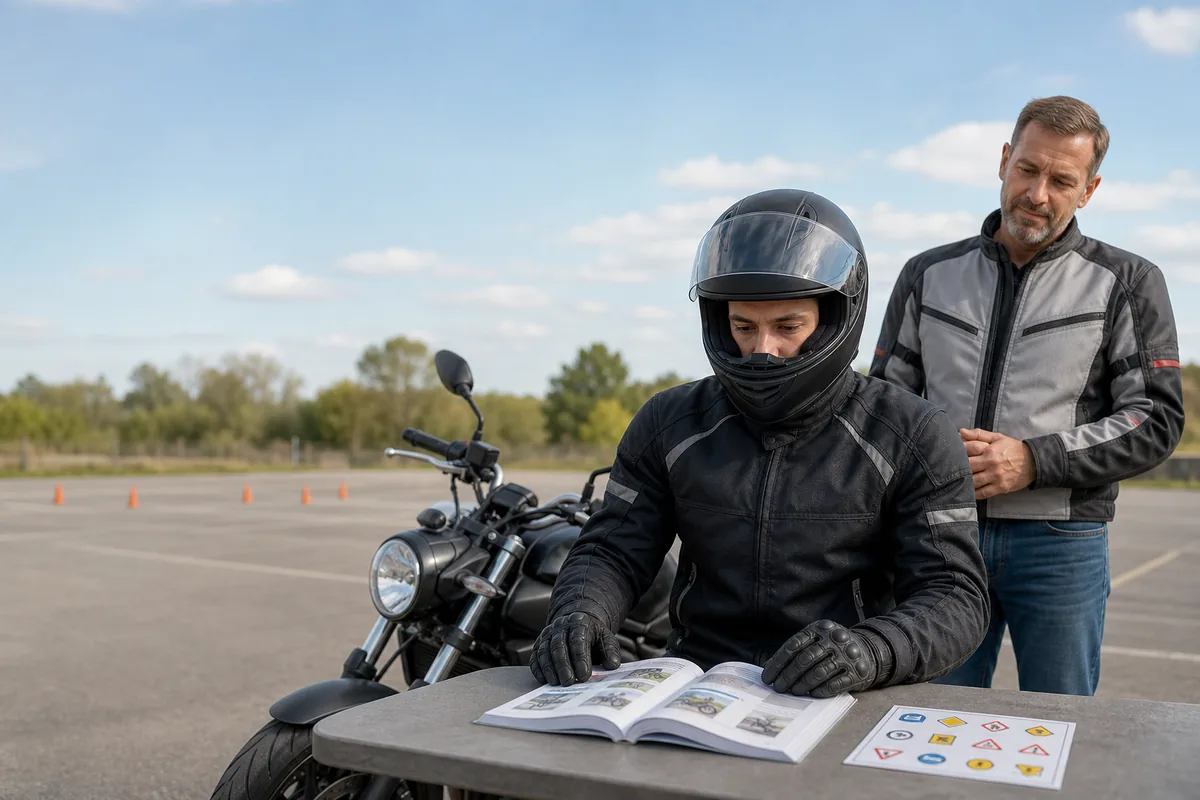
Quick answer: what should you study?
For a motorcycle permit test, start with your state motorcycle operator handbook. Then study protective gear, motorcycle controls, braking and traction, curves, lane position, visibility, intersections, passengers, hazards, and impairment. The exact number of questions, passing score, documents, fees, and whether a safety course can replace part of the process depend on your state.
Use our DMV motorcycle permit practice test for a baseline, but treat it as independent study material. The official handbook and licensing agency remain the source of truth for your application.
What is the motorcycle permit test?
The motorcycle permit test is the knowledge portion of a state licensing process. It checks whether you understand the decisions that keep a rider visible, balanced, and prepared for changing traffic conditions. Depending on the state, the credential may be called a motorcycle learner permit, motorcycle endorsement, motorcycle-only license, or a similar term.
The exam is separate from hands-on riding skills. Passing the knowledge test does not automatically mean you can ride without restrictions, carry passengers, skip supervised practice, or receive a full motorcycle license. Read the permit conditions issued by your state and follow any learner restrictions.
Start with the agency that will issue the credential. The California DMV motorcyclists guide, New York DMV motorcycle permit page, and Florida motorcycle licensing guidance show why the process must be checked state by state.
Motorcycle permit vs regular learner permit vs endorsement
These terms overlap in everyday searches, but they do not always describe the same legal path. Use the comparison below to decide what information you still need from your state agency.
| Credential or test | Main focus | What to verify |
|---|---|---|
| Regular learner permit | General traffic laws and passenger-vehicle driving knowledge. | Age, identity, residency, general knowledge test, vision check, and learner restrictions. |
| Motorcycle learner permit | Motorcycle-specific knowledge plus supervised riding conditions. | Motorcycle handbook, protective gear, passenger rules, night-riding limits, supervision, and retake rules. |
| Motorcycle endorsement | Permission added to another driver's license in states using an endorsement model. | Knowledge test, skills test or approved course, medical/vision steps if applicable, and renewal rules. |
| Motorcycle safety course | Structured rider training that may combine classroom and on-cycle skills. | Whether the course is approved, which test it replaces, completion validity, and remaining DMV steps. |
Motorcycle permit test requirements to verify first
Before studying for a specific appointment, write down the rules that apply to your age, license status, state, and intended motorcycle credential. A practice score cannot fix an application that is missing a required document or course.
Eligibility and credential
Confirm the minimum age, whether you need a regular driver license first, whether the state uses a learner permit or endorsement, and whether teen applicants follow a different path.
Identity and residency
Prepare the identity, lawful-status, residency, and Social Security documents listed by the issuing agency. Names and dates should match across documents.
Handbook and course rules
Download the current state motorcycle handbook and check whether an approved safety course is required, optional, or accepted as an alternative to a skills test.
Appointment, fee, and retake
Verify whether testing is walk-in, appointment-only, online, or handled by a separate provider. Record the fee, waiting period, and retake rule before you travel.
If you are unsure what to bring, use the site's DMV permit test document checklist as a starting point, then replace the general list with your state's current motorcycle requirements.
What to study for the motorcycle knowledge test
Motorcycle permit test questions reward safe judgment more than memorized slogans. Read the handbook explanations, picture the situation on the road, and ask which choice gives you the most time, traction, visibility, and escape space.
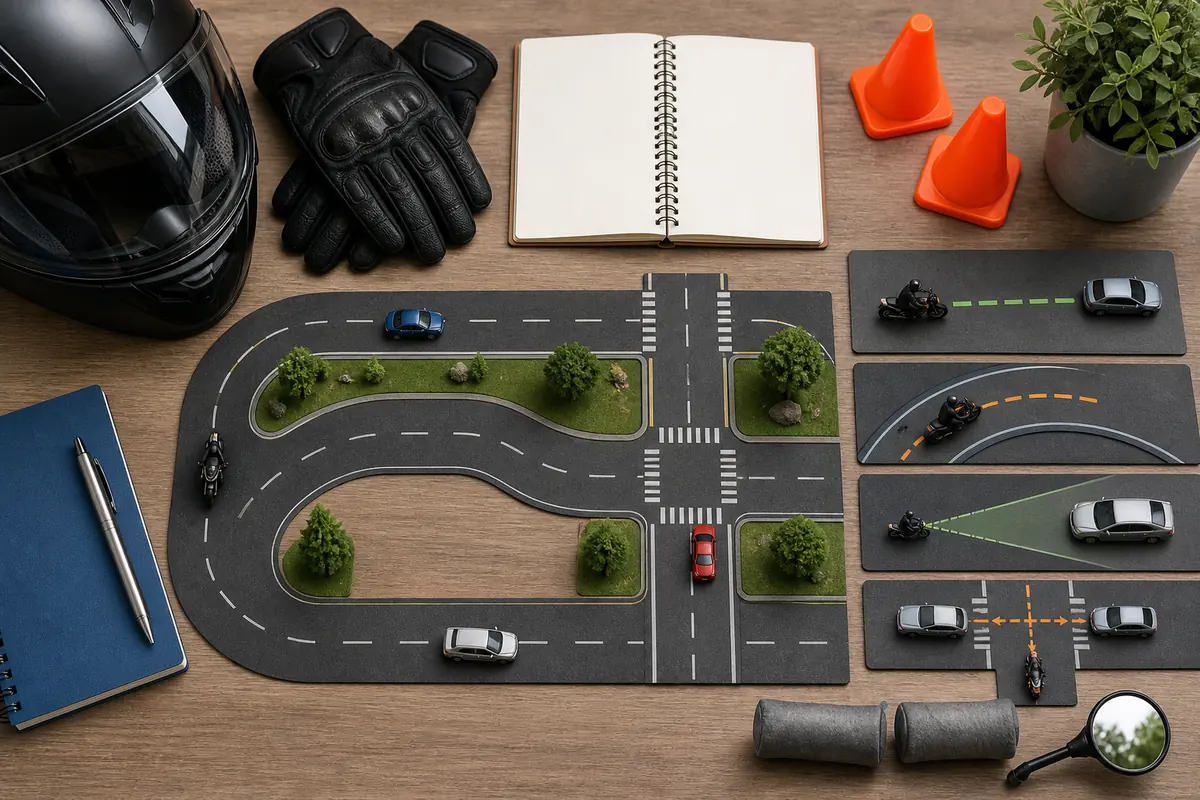
| Topic | What to understand | Common trap |
|---|---|---|
| Controls and protective gear | Know the controls, pre-ride checks, helmet and eye protection expectations, clothing, and why gear supports injury reduction. | Choosing comfort or appearance over proper fit and coverage. |
| Braking and traction | Understand smooth braking, available traction, wet or loose surfaces, stopping distance, and how abrupt inputs can destabilize a motorcycle. | Waiting until a hazard is close, then making one sudden control input. |
| Curves and lane position | Study speed selection, sight lines, lane thirds, escape routes, and the effect of a changing curve or blocked view. | Entering too fast or placing the motorcycle where a driver is unlikely to see it. |
| Visibility and intersections | Review headlight use, reflective equipment, blind spots, following distance, scanning, turn signals, and conflict points at intersections. | Assuming a driver has seen you because you can see the driver. |
| Passengers, cargo, and group riding | Know how a passenger or load changes balance, acceleration, braking, space needs, and the decisions required for a safe group ride. | Treating extra weight or a passenger as if the motorcycle handles the same way. |
| Hazards and impairment | Study slippery surfaces, animals, road debris, wind, fatigue, alcohol, drugs, distraction, and emergency choices. | Focusing only on the obstacle and forgetting the safest path after avoiding it. |
How many questions is the motorcycle permit test?
There is no single nationwide answer. The state decides the number of questions, passing score, time limit, test sections, and whether motorcycle knowledge is combined with another licensing step. Some agencies publish a motorcycle operator manual and sample questions without publishing the exact live exam format.
That means a search for “how many questions is the motorcycle permit test” should lead to two checks: the current official test page for your state and the handbook chapter that describes the motorcycle credential. Do not use a number from another state as your passing target.
Our motorcycle permit practice test can help you identify weak topics. It is not an official DMV exam and should be paired with your state's current handbook.
How to study for a motorcycle permit test: a seven-day plan
A short, repeatable plan works better than taking random quizzes until you recognize the answer choices. Change the schedule if your state requires a course or appointment first, but keep the study loop: handbook, practice, missed answers, targeted review, mixed retest.
| Day | Study action | Readiness check |
|---|---|---|
| 1 | Choose the state, credential, and current handbook. Write down the test sections and application steps. | Can you explain whether you need a permit, endorsement, course, or separate skills test? |
| 2 | Study controls, pre-ride checks, protective gear, and basic motorcycle balance. | Can you explain why each safety check matters instead of only naming it? |
| 3 | Review braking, traction, stopping distance, curves, and emergency swerving. | Can you choose the safest first response when traction or space is limited? |
| 4 | Study lane position, visibility, following distance, intersections, hazards, and passengers. | Can you identify where another road user may fail to see you? |
| 5 | Take a full mixed practice session without notes. Mark every uncertain answer, not just wrong answers. | Do you know which handbook section explains each missed concept? |
| 6 | Review weak topics, reread the handbook, and take focused quizzes for braking, curves, visibility, or hazards. | Are you improving because you understand the rule, not because you remember the option order? |
| 7 | Retake a mixed quiz, verify documents and appointment details, and stop cramming unfamiliar material late at night. | Is your score consistently strong with no guessing pattern? |
Motorcycle permit test day checklist
Test day is easier when you separate what is required for the exam from what is required for the motorcycle credential. The checklist below is a planning aid; your state agency's appointment confirmation takes priority.
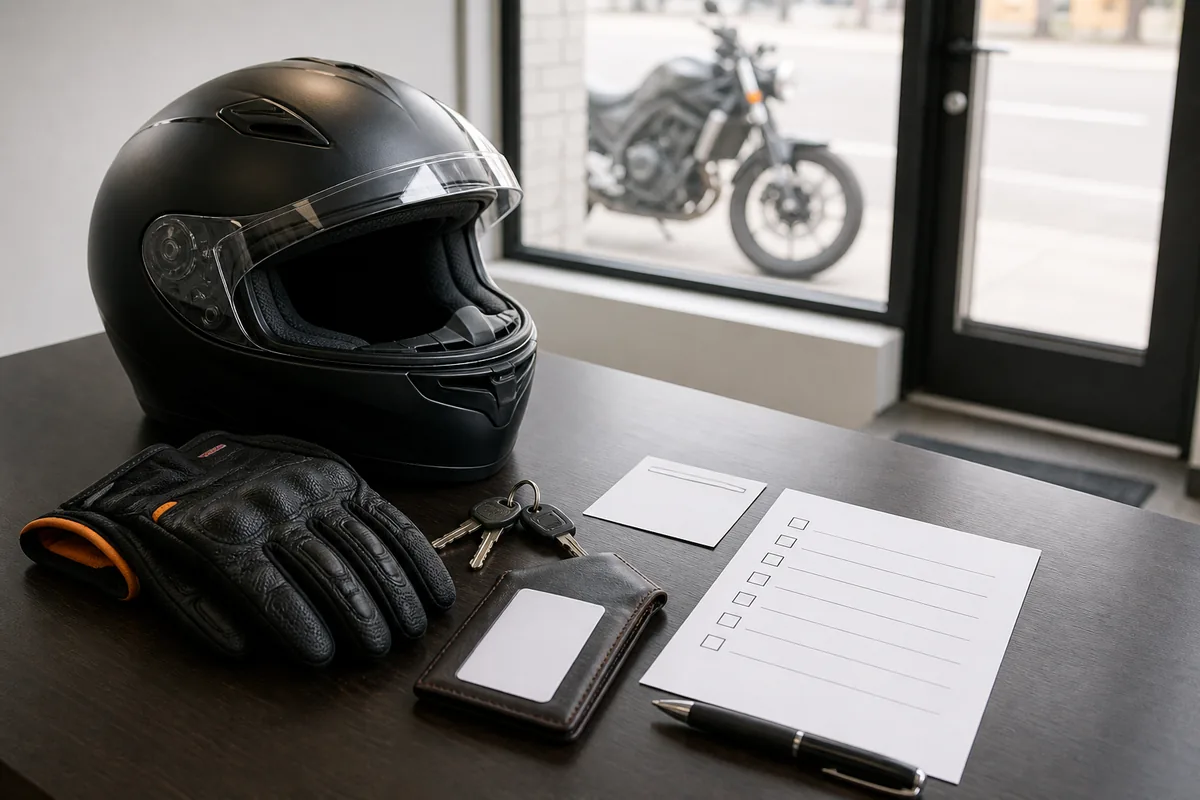
- Confirm the correct service. Make sure you booked a motorcycle knowledge test, permit transaction, endorsement appointment, or approved course—not a regular road test by mistake.
- Bring required documents and payment. Keep identity, residency, application confirmation, course certificate if applicable, and the accepted payment method together.
- Check vision and equipment rules. Bring glasses or contacts if you use them. Do not assume you can ride to the office or bring a motorcycle for a skills test without checking the licensing conditions.
- Ask about the result. Save the score report, receipt, retake instructions, restrictions, and next-step information before you leave.
- Keep the knowledge test separate from riding practice. Passing a written exam does not remove learner restrictions or replace supervised skills training.
Motorcycle safety course vs permit test
A safety course can be valuable even when it does not replace the knowledge test. It gives you structured practice with controls, braking, cornering, and hazard decisions, while the permit test checks whether you understand the rules and safety principles in the handbook.
| Question | Permit test | Safety course |
|---|---|---|
| Primary job | Check knowledge of motorcycle safety and state rules. | Teach and observe riding techniques in a structured environment. |
| Format | Usually written or computer-based knowledge questions, with state-specific variations. | Classroom, on-cycle exercises, or both, depending on the approved provider. |
| Can it replace another step? | Usually does not replace hands-on skills training. | May affect the skills-test or endorsement path in some states, but verify the exact rule. |
| Best use | Learn the handbook language and test expectations. | Build controlled riding habits before independent practice. |
Common motorcycle permit test mistakes
Studying only car rules
General traffic knowledge helps, but rider questions add traction, lane position, protective gear, passenger, and emergency decisions.
Memorizing a number from another state
Question counts and passing scores vary. Use your agency's current manual and exam page instead of a generic national number.
Skipping missed-answer review
A high score is less useful when it comes from guessing. Read the explanation, find the handbook topic, and retest by weakness.
Motorcycle permit test FAQ
What is on the motorcycle permit test?
A typical motorcycle knowledge test covers controls, protective equipment, braking, traction, curves, lane position, visibility, intersections, passengers, hazards, and impairment. Use the current handbook for the exact topics in your state.
How many questions is the motorcycle permit test?
There is no single nationwide count. Your state controls the number of questions, passing score, time limit, separate sections, and retake policy. Verify the current exam details before you schedule.
Is the motorcycle permit test the same as the regular permit test?
No. A regular learner permit test covers general driving knowledge. The motorcycle test adds rider-specific safety decisions such as traction management, countersteering, emergency braking, lane position, protective gear, and passenger safety.
How should I study for a motorcycle permit test?
Read the official handbook, learn the rider-specific topics, take a mixed practice session, review every missed answer, study the matching chapter, and repeat until you can explain the safest choice without guessing.
Can I take the motorcycle permit test online?
Sometimes. Online testing depends on state policy, applicant type, test category, identity checks, device requirements, and approved providers. Confirm the exact option through the official licensing website.
Do I need a motorcycle safety course before the permit test?
Some states or applicants use an approved course as part of the licensing path, while others still require a knowledge test. Ask the issuing agency which course, if any, changes the remaining testing steps.
Official sources checked
- California DMV Motorcyclists' Guide
- New York DMV motorcycle learner permit and license information
- Florida FLHSMV motorcycle rider education and endorsement guidance
Source check date: August 22, 2026. State eligibility, documents, fees, test format, course credit, and online availability can change. Verify the rule with the state agency that will issue your motorcycle credential.
Bottom line
To prepare for the motorcycle permit test, use the current state handbook as your foundation, study rider-specific safety decisions, practice by topic, and verify the exact question count and application steps before test day.