Is the Permit Test Multiple Choice? What the DMV Written Test Looks Like
Most learner permit tests are multiple choice, but the exact format depends on your state. Here is what to expect before you schedule the DMV knowledge test.
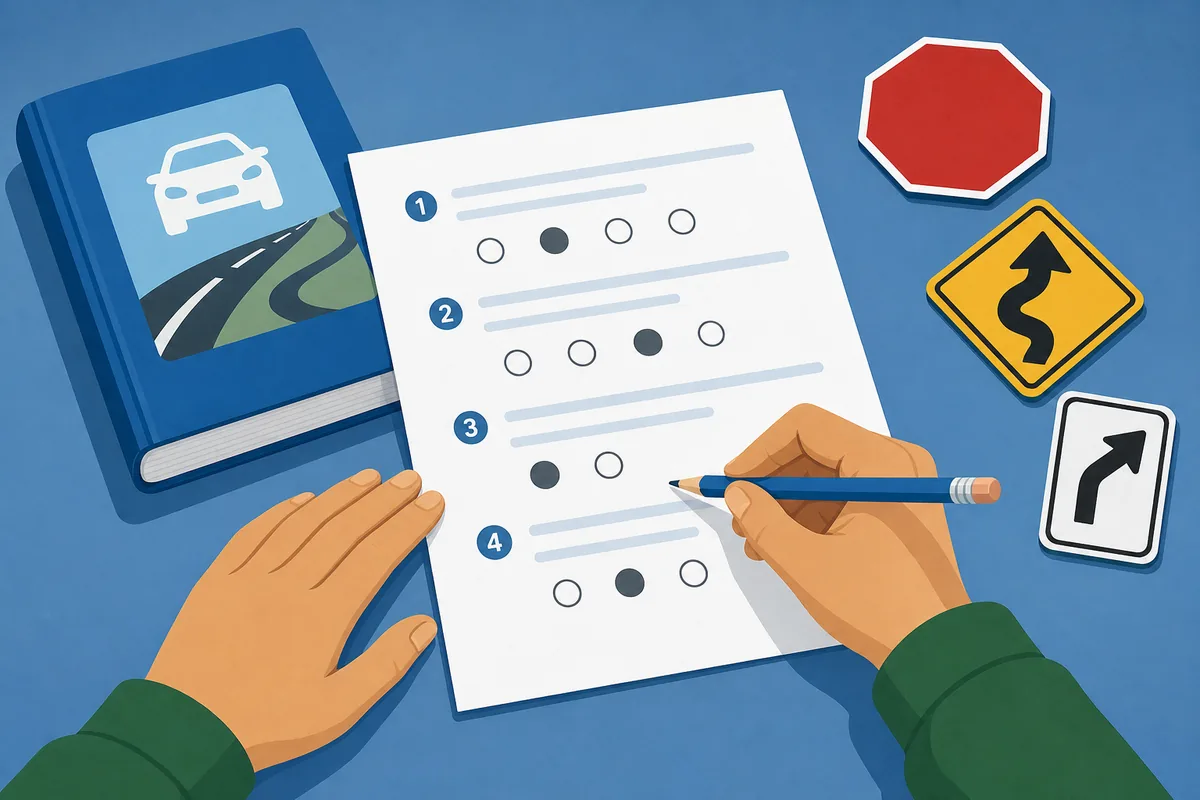
Quick Answer: Is the Permit Test Multiple Choice?
In most states, yes, the permit test is multiple choice. You usually read a traffic-law, road-sign, or safe-driving question and choose the best answer from three or four options. The state DMV still controls the exact format, number of questions, passing score, retake rules, language support, and whether the test is online or in person.
If you are worried about writing long answers, essays, or open-ended explanations, the regular learner permit knowledge test is not usually built that way. It is designed to check whether you recognize legal driving rules and can apply them to common situations. That means the challenge is less about writing and more about recognizing the safest and most legally correct option.
The format can still feel different from one state to another. California, Florida, New York, Texas, and other states publish their own driver handbooks and sample tests. Some use mostly text questions. Some include road sign images. Some online tests may include identity checks before you begin. Before test day, confirm your state's current rules and then practice in a format that feels close to the real exam.
What Does the DMV Permit Test Look Like?
The typical permit test question gives a short prompt followed by a few possible answers. You select the answer that best matches the driver handbook. Some questions test direct memory, such as legal blood alcohol limits or sign meanings. Others test judgment, such as what to do at a flashing red light, how to yield, or how much following distance to leave in bad weather.
| Format Element | What You Usually See | How to Prepare |
|---|---|---|
| Answer choices | Three or four options, with one best answer. | Practice explaining why the wrong answers are unsafe or illegal. |
| Road sign questions | A sign image, sign shape, sign color, or written sign meaning. | Use a focused permit signs test until shapes and colors feel automatic. |
| Scenario questions | A short driving situation involving right-of-way, speed, hazards, or lane use. | Read the full prompt before choosing; one small word can change the answer. |
| State-specific rules | Questions about local laws, teen licensing, DUI rules, school zones, or penalties. | Study the official handbook for your state, not only generic practice questions. |
Multiple choice does not mean easy. A well-written DMV question often includes two answers that sound reasonable. The correct answer is usually the one that is safest, legal in your state, and supported by the official handbook.
Why the Format Changes by State
There is no single national permit test. Each licensing agency decides the number of questions, pass mark, test delivery method, and retake policy. That is why one state may use a 20-question test while another uses a 46- or 50-question knowledge exam. The same is true for answer choices and road sign presentation.
What Is Usually Similar
- Questions are mostly multiple choice.
- Road signs and traffic laws are core topics.
- You need a minimum percentage to pass.
- Official handbooks are the main source.
What Can Be Different
- Total question count and pass score.
- Online testing availability.
- Audio, language, or accessibility options.
- Waiting period and retake fees.
For the number of questions and pass score in your state, use our state-by-state permit test question guide. If you are planning to test from home, compare the rules in our online permit test guide before you pay a fee or upload documents.
Common Question Types on a Multiple-Choice Permit Test
Most states mix several question styles into the same exam. Knowing the styles helps you avoid studying only definitions while missing applied driving questions.
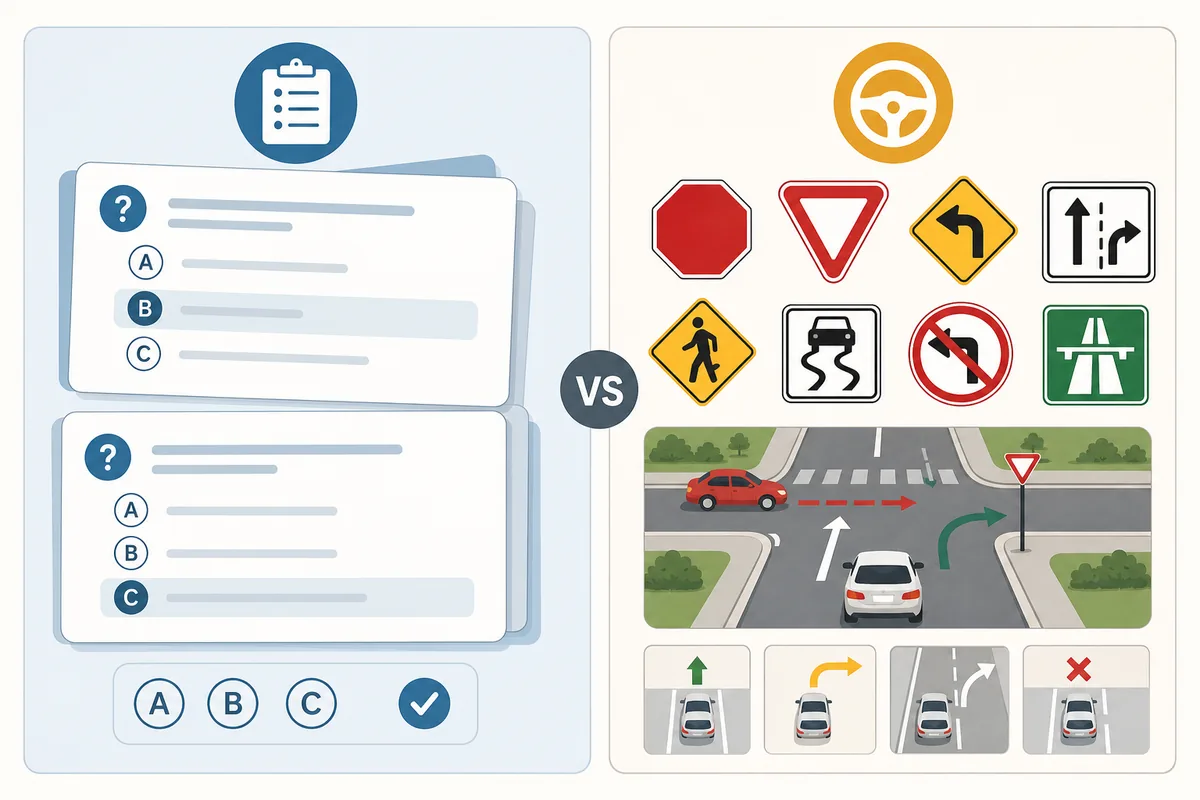
| Question Type | Example Topic | Best Study Method |
|---|---|---|
| Rule recall | Speed limits, alcohol laws, seat belts, school buses. | Make short notes from the handbook and retest missed rules. |
| Road signs | Stop, yield, merge, no turn, slippery road, work zone. | Study shape and color first, then practice sign meaning. |
| Right-of-way | Four-way stops, pedestrians, emergency vehicles, unprotected turns. | Draw the situation or explain the safest action out loud. |
| Hazard response | Skids, rain, fog, tire failure, following distance. | Connect each answer to a safety principle, not memorized wording. |
| Document or process rules | Age requirements, supervised driving, permit restrictions, retakes. | Verify on your official DMV site because these rules change. |
How to Answer Multiple-Choice Permit Test Questions
The best strategy is to slow down and identify what the question is really testing. DMV questions often contain absolute words such as "always," "never," "only," or "must." Those words matter. A choice that sounds familiar can still be wrong if it ignores pedestrians, weather, right-of-way, or a posted sign.
- Read the last sentence first if the prompt is long. It tells you whether the question asks for the safest action, legal requirement, or sign meaning.
- Eliminate unsafe answers. Choices that speed up near hazards, ignore signs, or rely on aggressive driving are usually wrong.
- Watch for state-specific wording. If your handbook uses a specific rule, follow that rule over generic memory.
- Do not choose by answer letter patterns. Real tests randomize choices; memorizing A/B/C positions does not work.
- Review missed explanations. A missed question is useful only if you can explain why the correct option is better.
Do Not Use "Answer Dumps"
Searches such as "DMV test questions and answers" can lead to outdated or unofficial lists. Use practice tests to learn topics and reasoning, then verify rules in the official handbook for your state.
A Simple Practice Plan for Multiple-Choice Tests
Because the permit test is usually multiple choice, you can train with a repeatable review loop. The goal is not only to get a passing score once. You want enough margin that test-day nerves, unfamiliar wording, or a few hard sign questions do not push you below the pass mark.
Readiness Target
Aim for 90% or higher on several practice sessions, then review every missed explanation. If you are barely passing practice tests, keep studying before paying for the real exam or scheduling an online session.
Start with a broad permit test practice session, then isolate weak categories. If road signs are the problem, switch to a signs-only quiz. If you miss state rules, read that section of the handbook again. If you miss scenario questions, focus on right-of-way, speed for conditions, lane changes, and hazard response.
For state-specific formats, use our dedicated practice pages for California permit practice, Florida permit practice, and Texas permit practice. Each one keeps the practice format closer to the state's question count and score target.
Official Sources to Check Before Test Day
Permit test formats can change when a DMV updates online testing, handbook editions, or retake rules. Before you apply, confirm your exact state requirements with official sources: