CDL Permit Test 2026: Complete Commercial Learner's Permit Guide
Published August 18, 2026 · 14 minute read
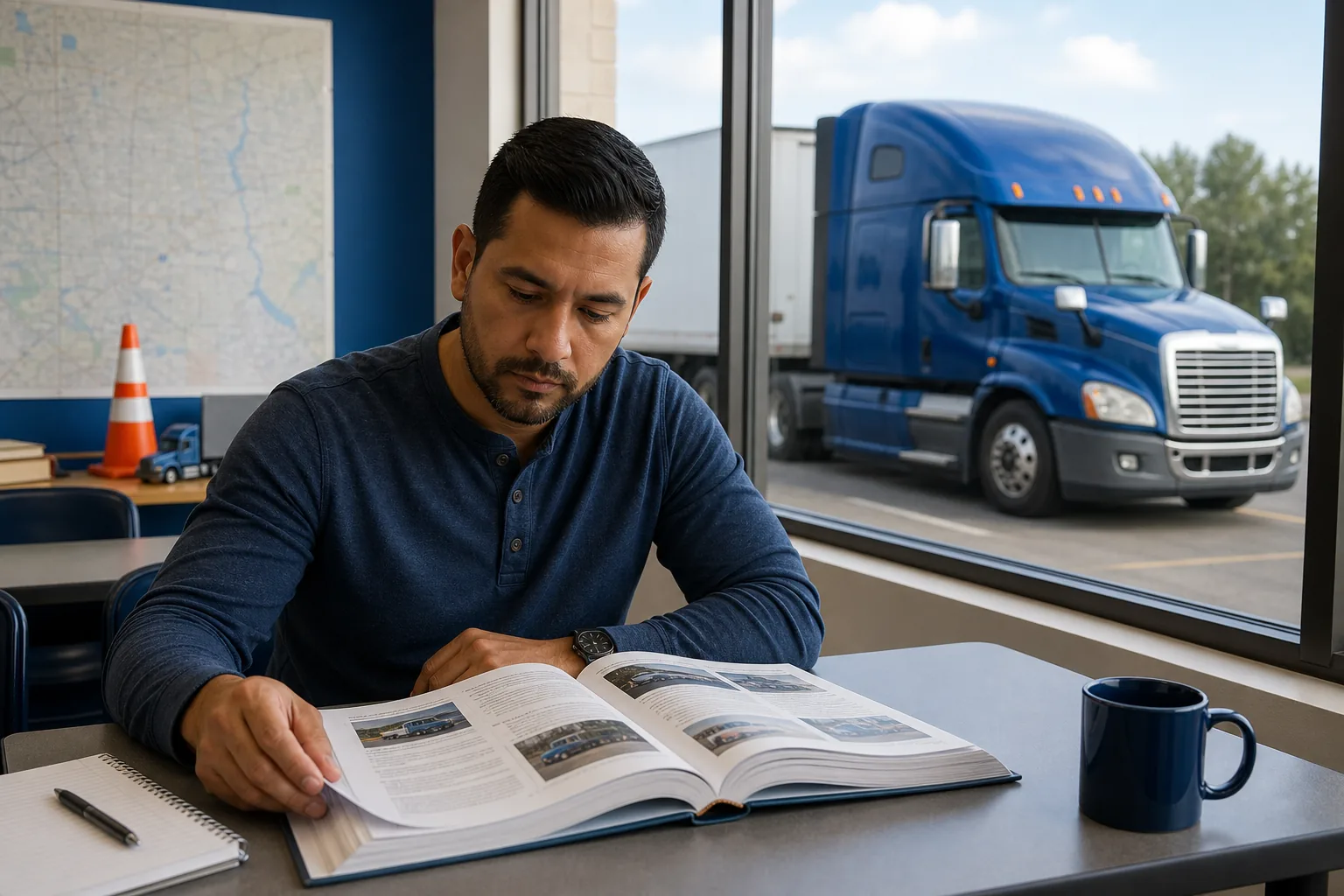
The CDL permit test is the knowledge-test stage before a commercial learner's permit (CLP). The best way to prepare is to identify your vehicle class and endorsements first, study the matching state CDL manual, and verify the current documents, fees, question count, and testing method with your licensing agency.
Quick answer
What is the CDL permit test? It is a state-administered knowledge exam, or group of exams, used to qualify for a commercial learner's permit. You may need general knowledge plus tests for air brakes, combination vehicles, passenger transport, school buses, tank vehicles, doubles and triples, or hazardous materials.
There is no single national question count or one universal passing score. Your state, CDL class, endorsements, age, medical status, and intended type of driving can all change the requirements.
What is the CDL permit test?
The CDL permit test checks whether you understand the safety rules and operating knowledge needed to begin commercial driver training. It is different from the hands-on skills test. The knowledge exams come first; the skills test later evaluates vehicle inspection, basic control, and on-road driving.
A state licensing agency normally issues a commercial learner's permit after you satisfy its application requirements and pass the knowledge tests that match your planned commercial driving. The permit lets you practice only within the restrictions that apply to your state, vehicle, accompanying driver, and route.
Federal guidance provides the framework for commercial licensing, but the state that issues your permit controls the application workflow, appointment process, fees, forms, and exact testing format. Use the FMCSA commercial driver's license resources for the federal overview, then open your state's current CDL manual and licensing page.
Choose your CDL class and endorsements before you study
Many avoidable study mistakes happen because applicants prepare for a generic “CDL test” without deciding what they intend to drive. Your vehicle class and endorsements determine which knowledge sections matter.
| Decision | What it changes | Study direction |
|---|---|---|
| Class A | Often used for combinations such as a tractor and trailer when the vehicle meets the applicable weight rules. | General knowledge, combination vehicles, air brakes when applicable, and any job-specific endorsement. |
| Class B | Often used for a single heavy vehicle, such as a straight truck or bus, under the state's classification rules. | General knowledge, air brakes when applicable, passenger or school-bus sections when relevant. |
| Class C | Can apply to vehicles that do not fit Class A or B but require a commercial license because of the vehicle or cargo. | General knowledge plus the endorsement or special qualification that matches the job. |
| Endorsements | Add permission for a category such as passenger, school bus, tank, doubles/triples, or hazardous materials. | Read the separate endorsement section; do not rely on general CDL practice questions alone. |
Important: The labels above are a planning guide, not a substitute for your state's classification rules. Confirm the vehicle weight, trailer, passenger, cargo, and endorsement requirements before booking the exam.
CLP requirements to check before booking
Gathering the right information before you schedule can prevent a wasted trip. States differ, but these are the common checkpoints:
Age and driving scope
Check the minimum age for the class and whether your first commercial driving is limited to intrastate work. Federal interstate rules and state exceptions can affect the path you qualify for.
Identity and residency
Prepare the identity, lawful-status, residency, and Social Security documents listed by your state. Names and dates should match across records.
Medical and self-certification
Some commercial drivers must meet medical-certification or self-certification requirements. Use the current state and FMCSA instructions for your driving category.
Existing license and history
Confirm whether you need a valid noncommercial license, what driving history must be disclosed, and whether any suspension or restriction affects eligibility.
Testing appointment
Find out whether knowledge tests are walk-in, appointment-only, or handled through a separate commercial testing office. Keep your confirmation and receipt.
Fees and retakes
Check the application fee, each knowledge-test fee, endorsement fee, permit fee, and the rule for a failed attempt. Do not assume a retake is free.
If you are comparing the CDL process with a regular learner permit, keep the workflows separate. The regular permit question-count guide is useful for ordinary learner permits, but it does not replace a commercial driver's manual.
What to study for the CDL permit test
Start with the general knowledge section, then add only the commercial topics that match your class and endorsements. A focused study list is more efficient than memorizing random question banks.
General knowledge
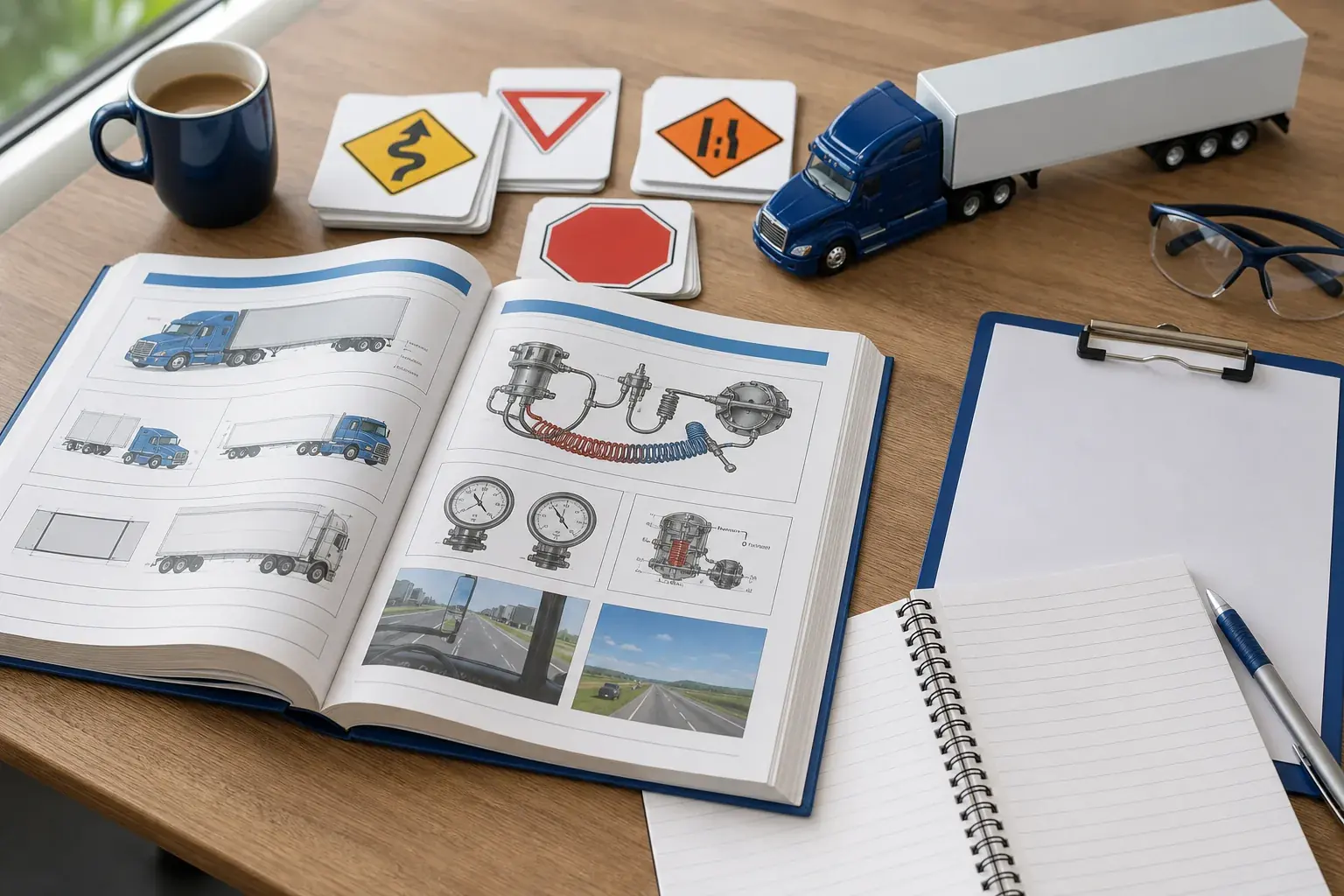
Expect broad commercial-driving concepts such as safe vehicle operation, space management, speed control, hazard awareness, cargo security, railroad crossings, distracted driving, fatigue, and emergency decisions. Read the wording carefully: commercial questions often test what is safest before a problem becomes urgent.
Air brakes
If your vehicle path involves air brakes, study the system parts, pressure gauges, warning devices, low-air procedures, brake fade, inspection steps, and the conditions that can create a restriction. Use the exact air-brakes chapter in your state manual because the exam may test both concepts and inspection decisions.
Combination vehicles
Combination-vehicle study usually covers coupling and uncoupling, trailer swing, rollover risk, following distance, inspections, skid control, and how cargo or road conditions affect a tractor-trailer. These questions reward understanding the reason behind a rule rather than memorizing a single sentence.
Endorsement sections
Passenger, school bus, tank, doubles and triples, and hazardous-materials endorsements have their own safety issues. If you do not need an endorsement for the job you want, do not let an unrelated section crowd out the class-specific material you actually need.
For free practice, you can use our permit test practice questions to build general test habits, but label them as independent study material. They are not an official CDL question bank and cannot replace the state manual.
How many questions are on the CDL permit test?
The number of questions, passing score, time limit, and number of separate exams depend on the state and the tests you select. A general knowledge exam may be joined by additional tests for air brakes or endorsements. That is why a search for “how many questions are on the CDL permit test” needs a state-specific answer.
| Before you memorize a number | Ask this instead |
|---|---|
| Question count | How many questions are in my state’s general knowledge test and each endorsement test I selected? |
| Passing score | Is the minimum score different for general knowledge, signs, air brakes, or an endorsement? |
| Test format | Is the exam computer-based, written, appointment-only, or available through an approved online service? |
| Retake rule | How soon can I retest, what fee applies, and does a failed section require retaking the whole set? |
Use your state CDL manual and official licensing page as the source of truth. Search results, third-party practice sites, and old forum answers can describe a different state, an older rule, or a different endorsement.
A practical CDL permit test study plan
A good plan is short enough to follow and specific enough to expose weak areas. The schedule below works as a starting point; adjust it to your exam date and the chapters named by your state.
Day 1: Define the test
Choose the CDL class, endorsements, and state. Download the current manual, write down the appointment rules, and make a list of required documents.
Days 2–3: Read the core chapters
Study general knowledge first. Mark safety decisions, inspection items, numbers, restrictions, and any terms you cannot explain without looking back.
Days 4–5: Add vehicle systems
Review air brakes, combination vehicles, cargo, and the class-specific sections that match your intended vehicle. Draw a simple system diagram from memory.
Day 6: Add endorsements
Study only the endorsement chapters you need. Separate similar rules into a one-page comparison so tank, passenger, school-bus, and hazmat concepts do not blend together.
Day 7: Practice and explain
Take a mixed practice session, review every missed answer, and explain why the correct choice is safest. Guessing correctly is not evidence of readiness.
Final review: verify logistics
Recheck the appointment, documents, fees, arrival time, allowed identification, and the exact test sections on your confirmation.
Readiness test: You are closer to ready when you can explain inspection and hazard decisions in your own words, score consistently above the published minimum on relevant practice sets, and identify the source chapter for a missed question.
What to do on CDL permit test day
- Arrive early enough to check in. Commercial testing offices may have different queues or document checks than ordinary DMV counters.
- Bring exactly what the state lists. Keep identification, residency evidence, medical or self-certification documents, appointment confirmation, and payment together.
- Confirm the selected tests. Before starting, make sure the screen or clerk shows the class and endorsements you intended to take.
- Read the question conditions. Commercial questions often include a vehicle, load, weather, brake, or hazard detail that changes the safest answer.
- Record the result. Save the result sheet, score report, receipt, or next-step instructions. You may need it for a retake or CLP application step.
If you fail one section, do not immediately book every test again. Ask which section must be retaken, when you are eligible, whether the fee changes, and whether your application remains active.
What happens after you pass the CDL permit test?
Passing the knowledge test is an important checkpoint, but it is not the same as receiving a full CDL. The state may still need to finish your CLP application, confirm documents or medical status, issue the permit, and apply restrictions.
With the CLP, you follow the supervised-driving rules that apply to your state and vehicle. The next path commonly includes entry-level training when required, behind-the-wheel practice, a pre-trip inspection routine, basic vehicle-control work, and the CDL skills test. The exact order and waiting periods are state-specific.
Do not use a passed knowledge-test result as permission to operate a commercial vehicle without checking the permit conditions. Read the permit itself, confirm the supervising-driver requirement, and follow the state agency's instructions for scheduling the skills test.
CDL permit test FAQ
What is the difference between a CDL permit test and a CDL skills test?
The permit test is the knowledge stage. The skills test is the hands-on stage that covers vehicle inspection, basic control, and road driving. Passing one does not automatically pass the other.
How many questions are on the CDL permit test?
There is no single nationwide number. The state sets the format, and the selected class or endorsements can add separate tests. Check the current state CDL manual for the exact count and passing score.
Can you take the CDL permit test online?
Sometimes, but it depends on the state, test type, identity checks, and approved testing provider. Many applicants still need an in-person knowledge-test appointment. Confirm the current process on the official state licensing website.
How much is the CDL permit test?
Fees vary by state and may be split among the application, knowledge tests, endorsements, permit issuance, and retakes. Treat online fee estimates as a starting point and verify the total before you schedule.
Can I study for the CDL permit test with a regular permit practice test?
General permit practice can help you review basic signs and test habits, but it is not enough for commercial systems, inspections, cargo, air brakes, combination vehicles, or endorsements. Use the official CDL manual for the commercial content.
Is a commercial learner's permit the same as a CDL?
No. A CLP is a supervised learning credential with restrictions. A full CDL requires the applicable eligibility, knowledge, skills, and licensing steps.
Bottom line
To pass the CDL permit test, start with the right class and endorsements, use the current state CDL manual, separate general knowledge from commercial systems, and verify the exact test count and application rules before you travel. A high practice score matters most when you can explain the safety decision behind each answer.
Once you pass, keep the knowledge result, follow the CLP restrictions, and treat supervised training and the skills test as separate milestones on the way to a commercial driver's license.
Official source checked
Source check date: August 18, 2026. State class rules, test counts, fees, documents, medical requirements, and online-testing availability can change; verify the current rule with the state agency that will issue your permit.